

Three Things That Genuinely Help With PTSD
Quick answer: Three evidence-supported ways to ease PTSD symptoms are trauma-focused psychotherapy (such as CBT or EMDR), regular physical activity, and massage therapy. These approaches can reduce anxiety, improve sleep, and help the body and mind feel safer over time. They work best alongside professional support.
Living with post-traumatic stress disorder can feel like your nervous system is stuck on high alert. Loud noises make you jump. Sleep won’t come. Memories show up uninvited. If that sounds familiar, you’re not alone—and there are practical ways to feel better.
This post breaks down what PTSD actually is, the symptoms to watch for, and three things that research suggests can help. None of these replace professional care, but they can be powerful parts of a recovery plan.
What Is PTSD?
PTSD is a mental health condition that can develop after someone experiences or witnesses a terrifying event. That might be combat, a serious accident, assault, a natural disaster, or any situation that felt life-threatening.
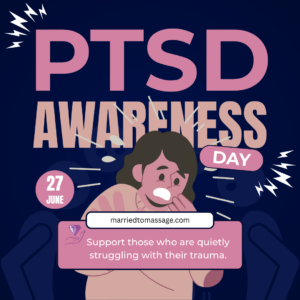
According to the National Institute of Mental Health (NIMH), most people who go through trauma will have some reactions afterward, but the majority recover naturally. When symptoms last longer than a month and start to disrupt daily life, it may be PTSD (NIMH, 2023).
PTSD is more common than many people realize. The U.S. Department of Veterans Affairs estimates that about 6 out of every 100 people will have PTSD at some point in their lives (U.S. Department of Veterans Affairs, 2023). It can affect anyone—veterans, survivors of abuse, first responders, and everyday people who’ve lived through something frightening.
What Are the Symptoms of PTSD?
PTSD symptoms usually fall into four categories, according to the NIMH:
- Re-experiencing symptoms: Flashbacks, nightmares, and frightening thoughts that bring the trauma rushing back.
- Avoidance symptoms: Staying away from places, people, or activities that serve as reminders, and avoiding talking about what happened.
- Arousal and reactivity symptoms: Being easily startled, feeling tense or “on edge,” difficulty sleeping, and angry outbursts.
- Cognition and mood symptoms: Trouble remembering details of the event, negative thoughts about yourself or the world, guilt, and loss of interest in things you once enjoyed.
Symptoms can appear within three months of the event or sometimes years later. They also vary from person to person. If these reactions last more than a month and interfere with work, relationships, or daily routines, it’s worth speaking with a healthcare professional.
Three Things That Help With PTSD
1. Trauma-Focused Psychotherapy
Talk therapy remains the most strongly supported treatment for PTSD. The American Psychological Association (APA) recommends several trauma-focused approaches, including Cognitive Behavioral Therapy (CBT), Cognitive Processing Therapy (CPT), and Prolonged Exposure therapy (APA, 2017).
Another well-studied option is Eye Movement Desensitization and Reprocessing (EMDR). During EMDR, a therapist guides you through recalling the traumatic memory while you follow side-to-side eye movements or other rhythmic stimulation. The goal is to help your brain reprocess the memory so it loses some of its emotional charge.
Choose trauma-focused therapy first if your symptoms are intense or have lasted a long time. Working with a licensed professional gives you a safe space to process what happened and learn coping skills that last.
2. Regular Physical Activity
Movement does more than build muscle—it can calm an overactive stress response. Exercise releases endorphins, improves sleep, and gives the body a healthy outlet for the tension that PTSD creates.
Research published in the journal Cochrane Database of Systematic Reviews found that physical activity may reduce PTSD symptoms, as well as related depression, when added to standard treatment (Lawrence et al., 2022). Activities like walking, running, swimming, and yoga have all shown promise.
Yoga deserves a special mention. A study supported by the National Center for Complementary and Integrative Health found that yoga helped reduce PTSD symptoms in women with chronic, treatment-resistant PTSD (van der Kolk et al., 2014). The combination of breathing, movement, and mindfulness seems to help the body feel grounded again.
Start small if exercise feels overwhelming. A ten-minute daily walk is a realistic first step that builds momentum over time.
3. Massage Therapy
Massage is often overlooked, but it can be a meaningful complement to other treatments. People with PTSD frequently carry chronic muscle tension and struggle to relax. Massage therapy addresses that physical side of trauma directly.
Studies suggest massage can lower cortisol—the body’s main stress hormone—while boosting serotonin and dopamine, which support mood and relaxation (Field, 2016). For someone whose nervous system is stuck in fight-or-flight, that shift can offer real relief.
Massage may also improve sleep and reduce anxiety, two areas where PTSD hits hard. Consider massage if physical tension, poor sleep, or difficulty relaxing are among your biggest struggles. It pairs well with therapy rather than replacing it.
A quick note: physical touch can feel uncomfortable for some trauma survivors. Let your massage therapist know your boundaries beforehand, and stop anytime something doesn’t feel right.
Putting It All Together
PTSD is treatable, and recovery is possible. Trauma-focused therapy gives you tools to process the past, exercise helps your body release stress, and massage soothes the physical tension that trauma leaves behind. Used together—and under the guidance of a healthcare professional—these approaches can make a real difference.
If you or someone you know is struggling, reach out to a licensed mental health provider. In the U.S., you can call or text the 988 Suicide and Crisis Lifeline for immediate, free, and confidential support.
Frequently Asked Questions
Can PTSD go away on its own?
Some people recover from trauma naturally within a few weeks. But when symptoms last longer than a month and disrupt daily life, professional treatment usually offers the best path to recovery. PTSD rarely improves on its own once it becomes chronic.
How long does PTSD treatment take?
It depends on the person and the approach. Many trauma-focused therapies, such as CPT and Prolonged Exposure, run for about 8 to 15 weekly sessions, according to the APA (2017). Some people need more time, especially with complex or long-standing trauma.
Is massage a replacement for PTSD therapy?
No. Massage therapy is best viewed as a complement to evidence-based treatments like psychotherapy. It can ease physical tension, improve sleep, and lower stress hormones, but it does not address the underlying trauma the way trauma-focused therapy does.
Who is most at risk of developing PTSD?
Anyone exposed to trauma can develop PTSD, but risk is higher for combat veterans, survivors of assault or abuse, first responders, and people with less social support after a traumatic event. Genetics and prior mental health conditions can also play a role.
What should I do if exercise or massage triggers anxiety?
Stop and go at your own pace. Trauma survivors sometimes feel uneasy with touch or intense physical sensations. Start gently, communicate your boundaries, and talk to a therapist about pacing. The goal is to feel safe, not pushed.
References
- American Psychological Association. (2017). Clinical Practice Guideline for the Treatment of Posttraumatic Stress Disorder (PTSD) in Adults.
- Field, T. (2016). Massage therapy research review. Complementary Therapies in Clinical Practice.
- Lawrence, S., et al. (2022). Exercise for post-traumatic stress disorder. Cochrane Database of Systematic Reviews.
- National Institute of Mental Health. (2023). Post-Traumatic Stress Disorder.
- U.S. Department of Veterans Affairs, National Center for PTSD. (2023). How Common Is PTSD in Adults?
- van der Kolk, B. A., et al. (2014). Yoga as an adjunctive treatment for posttraumatic stress disorder. Journal of Clinical Psychiatry.